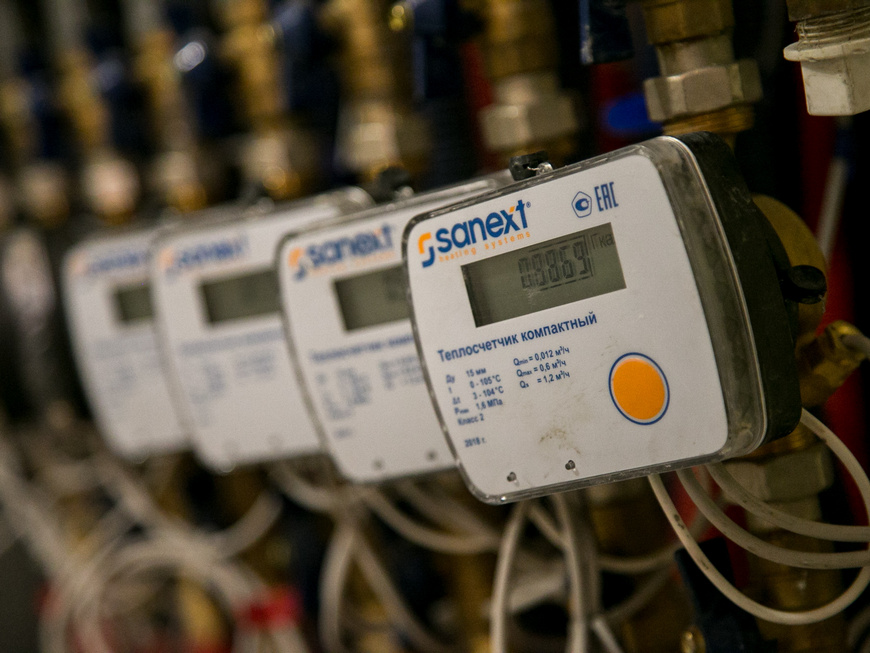
As many as 91% of the residential buildings and 95% of social facilities have been connected to the heating system in Kazan
read more-
Ilsur Metshin: “Waterside areas are the jewels of every city”
-
Ilsur Metshin takes part in the 1st International Forum of Port Cities in Kaliningrad
-
Ilsur Metshin on the Volunteer Center on Maksimova Street: “You have created a real center to help the front line”
-
Ilsur Metshin on the new equipment of Vodokonal: “It is very important to promptly eliminate accidents and blockages”
-
Renovation of tram networks and storm drains, as well as new medical centers: projects to be implemented in Kazan in 2027
-
The 5th Kazan International Legal Forum gathered 2,000 participants
-
Ilsur Metshin visits the Department of Food and Social Nutrition in Kazan
-
The Mayor of Kazan on the replenishment of the zoo: “Such events fill the treasury of the city’s tourist attractiveness”
-
Eight giraffes were transported to Kazan from Namibia
-
Rustam Minnikhanov and Ilsur Metshin take part in the opening of the Yardam Inclusion Center
-
I.Metshin: “The camp has everything for a good rest: the modern buildings, a sports venue, an entertainment area, and a wonderful canteen”
-
I. Metshin: “I am sure that as soon as we bring giraffes, the attendance will increase significantly at the Zoo”
I. Metshin: «Teenage protest is often a hidden request for attention and love»
The preventive measures and current challenges were discussed at a visiting meeting of the Commission on Juvenile Affairs at school № 107 of the Novo-Savinovsky city district. Kazan Mayor Ilsur Metshin headed the meeting with the participation of representatives of relevant departments, law enforcement agencies, the education system and deputies. They analyzed the current situation and outlined ways to strengthen work with adolescences at-risk groups.
The Mayor of Kazan noted that working with young people requires special sensitivity. «The issue of juvenile delinquency will be always there. Teenagers are sensitive to injustice and react acutely to boredom. Their protest is often a hidden request for attention, love, and recognition. Our task is to create special environment for every teenager», – said the Mayor.
Ilsur Metshin cited statistics for the last 20 years: the number of teenagers who have committed crimes has decreased almost fourfold – from 837 participants in 2006 to 221 in 2025, the number of such crimes has tripled – from 927 crimes to 315. However, 2025 was the first year in 20 years in Kazan when juvenile delinquency showed an increase again. This situation is compared with the statistics throughout the country.
It was decided to strengthen work with at-risk teenagers through the institute of social educators. The system, adopted in the city since 2009, demonstrates its effectiveness: 521 mentors supervise 688 minors, helping them find the right life guidelines and return to a socially acceptable lifestyle. The Mayor instructed to involve a wider range of people in mentoring.
The issues of summer employment and recreation for Kazan schoolchildren became another topic of the meeting. Today, the network of Kazan country camps has been seriously modernized: the living conditions now meet modern standards. More than 20,000 children and teenagers spend their holidays in the camps every year. Special attention is paid to children from families who find themselves in a difficult life situation. The camps are fully paid for from the city budget for these families. In 2025, 751 neglected teenagers had a rest in country camps, and over 2 thousand children at school camps.
Labor teams remain one of the most effective methods of socialization. The city annually organizes work and recreation groups for teenagers aged 14-17. In 2025, 827 schoolchildren received the opportunity to earn extra money, and almost half of them are teenagers who are under internal preventive control. Another 157 at-risk teenagers spent the summer in municipal camps.